
Elena Wagner · 18 September 2026
Regional Buyer Preferences Drive Targeted Shifts in Silver Item Distribution Networks
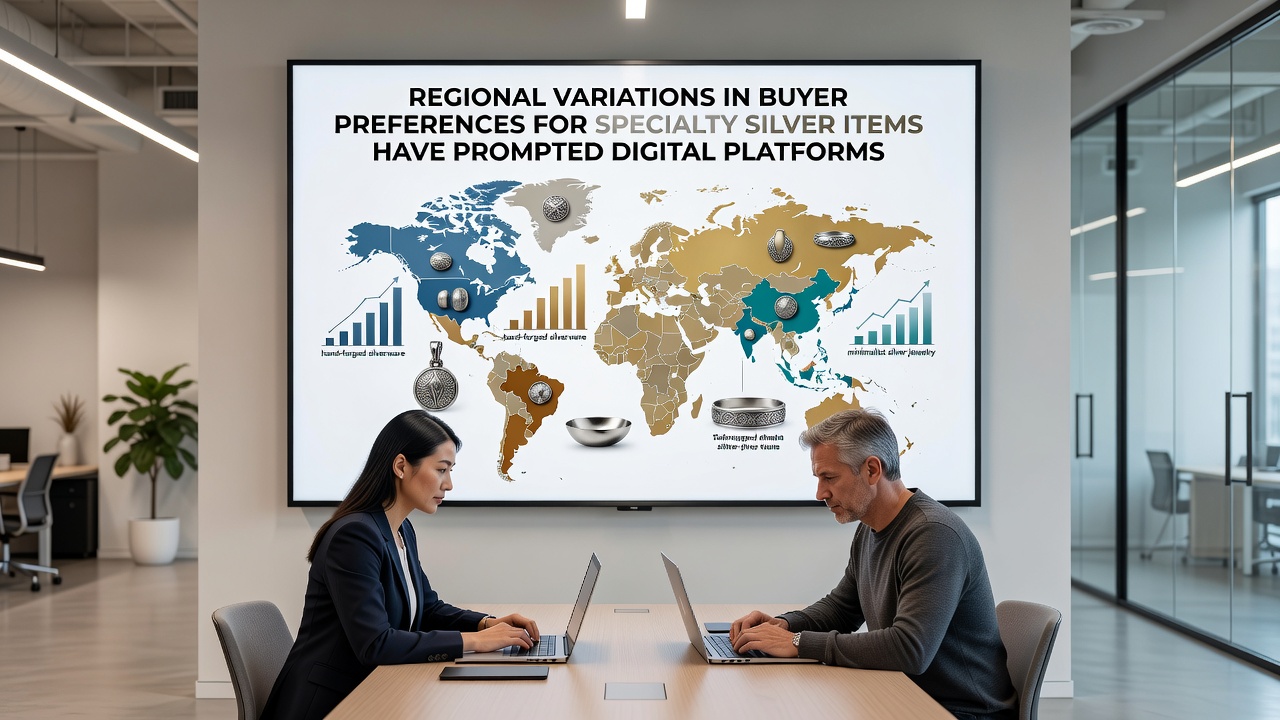
Regional variations in buyer preferences for specialty silver items have prompted digital platforms to adjust their distribution networks in targeted ways, according to industry reports from multiple e-commerce analysts; these changes reflect differences in demand for items such as engraved silverware, collector coins, and artisanal jewelry across North America, Europe, and Asia-Pacific markets. Data from September 2026 shows platforms reallocating inventory to fulfillment centers in specific zones rather than maintaining uniform global stock levels.
Patterns in North American Demand
Buyers in the United States and Canada often favor larger silver bars and investment-grade coins with standardized designs, while Mexican and Central American consumers show stronger interest in ornate silver jewelry incorporating traditional motifs. Platforms respond by routing more bulk silver products through warehouses in Texas and Ontario, whereas jewelry shipments move through facilities near border regions to reduce delivery times. Reports from the US Census Bureau indicate that e-commerce sales of specialty silver items rose 14 percent in the Southwest corridor during the first half of 2026 compared with the prior year, prompting several platforms to expand square footage dedicated to these categories.
European Market Adjustments
European preferences lean toward smaller, hallmarked silver pieces suitable for gifting and collectible sets that comply with EU traceability standards. Platforms have increased stocking of such items in fulfillment centers located in Germany and the Netherlands to serve both Western and Eastern European customers efficiently. A study released by Eurostat in September 2026 documented a 9 percent year-over-year increase in cross-border silver jewelry shipments within the EU, leading analysts to note that companies now prioritize regional certification compliance during inventory planning.
Asia-Pacific Shifts and Supply Chain Responses
In markets across China, Japan, and Australia, demand centers on contemporary silver accessories and limited-edition pieces featuring local cultural elements. Platforms adjust by directing more of these SKUs to warehouses in Singapore and Sydney, which serve as hubs for faster regional dispatch. Figures from the Australian Bureau of Statistics reveal that specialty silver imports through digital channels grew 11 percent in the second quarter of 2026, with platforms citing reduced transit costs after rerouting select product lines away from centralized European hubs.
Industry analysts tracking these developments point to improved order accuracy and lower return rates when platforms match regional tastes more closely with local inventory. One logistics report highlighted that platforms using data from multiple e-commerce sources achieved 18 percent faster restocking cycles in high-preference zones by September 2026. Those monitoring the sector note that such targeted distribution often involves partnerships with regional carriers to handle customs documentation for silver products that carry specific purity certifications.
Technology Enabling These Network Changes
Digital platforms rely on machine-learning models that process sales velocity by postal code and item type; these models help forecast which silver products will move fastest in each territory. Integration with warehouse management systems allows automatic rebalancing of stock between fulfillment centers without manual intervention in many cases. Observers note that platforms testing these systems in 2025 reported measurable reductions in excess inventory held at central locations, while regional centers maintained higher fill rates for locally preferred items.
Trade data compiled by Statistics Canada shows parallel trends in cross-border silver shipments between the US and Canada, where platforms have begun treating the two markets as interconnected zones for certain product categories. This approach reduces duplicate stocking while still accommodating preference differences such as Canadian buyers' higher uptake of maple-leaf themed silver coins. Similar segmentation appears in reports covering shipments between EU member states and the United Kingdom.
Conclusion
Regional variations in buyer preferences continue to shape how digital platforms configure their distribution networks for specialty silver items. Data compiled through September 2026 indicates that targeted adjustments in warehouse placement and routing have become standard practice among major e-commerce operators. Analysts expect ongoing refinement of these networks as new sales figures become available from government statistical agencies and industry monitoring groups.